Eloping in Alaska is one of the most beautiful ways to start a marriage. You trade the seating chart and rehearsal dinner for a glacier morning, a quiet mountain pass, or a ridge above the tree line — and you keep the day entirely your own. If you’re drawn to a small ceremony in a place that feels vast, this guide walks you through everything you need to actually pull it off: when to come, how to get legally married, where to say your vows, and how the stay around the ceremony shapes the whole experience.
Why Alaska Has Become a Top Elopement Destination
The pull of an Alaska elopement is hard to overstate. The scale of the landscape — glaciers, rivers, mountains that go on forever — does something a hotel ballroom can’t. Couples come here because they want a wedding day that feels like an adventure, not a production. Without a long guest list to manage, you can spend the morning on a glacier and the evening watching the alpenglow fade over the Talkeetna Mountains, and the entire day can be exactly as quiet, intimate, or dramatic as you want it.
It’s also genuinely accessible. State residency isn’t required, the marriage license process is straightforward, and ceremony venues range from free public-land overlooks to chartered helicopter landings on glaciers. Many couples turn the trip into a honeymoon at the same time — basing at an Alaska honeymoon resort near the ceremony spot keeps the days before and after the wedding part of the same uninterrupted experience.
Picking the Right Season for Your Alaska Elopement
Alaska has two strong elopement seasons, each with a completely different mood. Choose based on what you want your photos and memories to look like.
Summer (May–September): Glaciers, Wildflowers, and Endless Daylight
Summer is the most popular time to elope here, and for good reason. Temperatures sit comfortably in the 60s and low 70s, wildflowers cover the high meadows from late June through August, and the sun barely sets in mid-summer — which means you can hold a ceremony at 9 p.m. and still have golden light. Glacier hikes are at their best, river valleys are green, and wildlife is everywhere. If you want a daylight ceremony in a mountain meadow or on blue glacier ice, summer is your window.
Winter (Late September–April): Northern Lights, Snow, and Solitude
A winter elopement in Alaska is a different kind of magic. The crowds disappear, the mountains carry deep snow, and on a clear night the aurora can fill the sky. There’s no guarantee of a Northern Lights display on any given evening — it’s a natural phenomenon — but the odds rise significantly when you’re in a true dark-sky location away from city light. Couples who want to exchange vows in snowshoes, ride a snowmobile out to a quiet ridge, or hold their ceremony under stars and a green ribbon of aurora should be looking at this season. A northern lights resort with aurora-facing rooms gives you the best shot at catching the display from the comfort of your own bed.
Shoulder Months and Weather Trade-Offs
Late April and early May are mud season — beautiful but unpredictable, with snow giving way to thawing trails. Late September is one of the best-kept secrets in the calendar: fall colors light up the tundra, the first dustings of snow hit the peaks, and aurora season begins. If you’re flexible on dates, late August through late September gives you the rare overlap of warm-ish days, fall color, and a real chance at Northern Lights at night.
How to Get Married in Alaska: License, Witnesses, and Permits
Alaska makes the paperwork easy. You don’t need to be a resident, there’s no blood test, and the license fee is $60 (or $70 by mail). The one thing to plan around is the three-day waiting period: after you apply, you have to wait three business days before the license becomes valid. Once issued, it’s good for three months.
You’ll need a valid government ID and both partners present at application. Anchorage and Juneau courts don’t actually issue marriage licenses — in those cities you’ll apply through the State of Alaska’s Health Analytics & Vital Records office. Most other courts around the state can issue them on the spot. Plan for two witnesses (anyone over 18 — your photographer can count) and a licensed officiant. If your ceremony is happening on federal land — anywhere inside Denali, Wrangell-St. Elias, or another national park — you’ll need a special-use permit, and those can take 4–8 weeks to process. State park land and most public overlooks don’t require permits for small ceremonies.
The Best Places to Elope in Alaska
Alaska has hundreds of jaw-dropping ceremony spots, but a handful are particularly well-suited to small, intimate weddings within easy reach of Anchorage.
Hatcher Pass and the Talkeetna Mountains
About 90 minutes north of Anchorage, Hatcher Pass is a high alpine valley that delivers panoramic mountain views without a long drive or a difficult hike. In summer, the meadows turn green and the fireweed blooms; in winter, the snow lights up under a low sun. You can hold a ceremony at a roadside overlook with the Talkeetna Mountains stretching to the horizon, or hike a short ridge for total privacy. It’s also where you’ll find Hatcher Pass Castle — an off-grid adventure lodge in Alaska with private bathrooms, Wi-Fi, and aurora-facing rooms, sitting in the middle of the area’s best Alaska lodging and adventures.
Matanuska Glacier
Matanuska is one of the only road-accessible glaciers in Alaska, which makes it remarkably elopement-friendly. You drive in, suit up with crampons, and within an hour you’re standing on blue ice with seracs rising around you. Guided access is required, but the photos are unforgettable.
Knik Glacier and the Chugach Range
Knik Glacier is reached via off-road vehicle through the Knik River Valley — UTV tours run regularly from the Palmer area. The terminus opens onto an icy lagoon ringed by the Chugach peaks, and there’s almost never anyone else around. This is a strong pick if you want a ceremony spot that feels genuinely remote without committing to a full backcountry trip.
Denali Views from the Susitna Valley
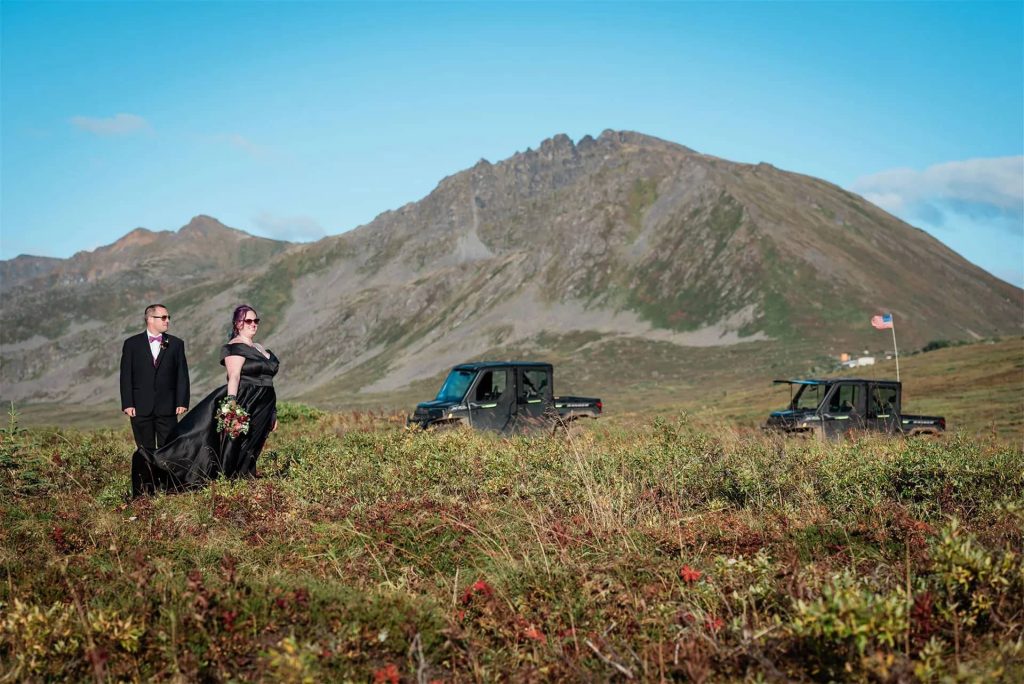
You don’t have to drive all the way to Denali National Park to get the mountain in your photos. On clear days, Denali is visible from a string of overlooks in the Susitna and Mat-Su valleys — Talkeetna, Trapper Creek, and certain ridges above Hatcher Pass all deliver the view. A UTV-assisted tundra hike to a Denali-view ridge makes for an unforgettable ceremony backdrop without the national-park permit logistics.
Anchorage Area and Chugach State Park
If you’re tight on time or arriving on a cruise, Chugach State Park sits right at Anchorage’s doorstep. Flattop Mountain, Glen Alps, and Eagle River Nature Center all work well for short-hike or drive-up ceremonies, and you can be back in the city for dinner. It’s the most convenient option, though it trades some solitude for accessibility.
Choosing How You’ll Reach Your Ceremony Spot: Land, Glacier, or Helicopter
How you actually get to your vow spot is one of the most important early decisions. Drive-up and easy-hike ceremonies work well at places like Hatcher Pass and most Chugach overlooks — they’re weather-flexible, low-stress, and easy on a wedding dress. Glacier hikes like Matanuska involve guided gear and a half-day commitment, but the visual reward is enormous. Helicopter elopements open up otherwise inaccessible peaks and glaciers, and operators in Talkeetna and Palmer can fly you to landing zones you couldn’t reach any other way; expect a meaningful budget add — but for the right couple, the flight itself becomes part of the story. Whichever route you choose, build a backup plan — Alaska weather can shift fast, and the strongest photos often come from couples who stayed flexible.
Your Vendor Team and Why Lodging Is the Decision That Sets the Tone
The actual vendor list for an elopement is short. You need a licensed officiant (the courts maintain a public list), an experienced elopement photographer who knows Alaska weather and locations, and two witnesses. Optional but worth considering: a florist for a small bouquet and boutonniere, a hair-and-makeup artist who’ll travel to your location, and someone to handle transportation to and from your ceremony spot.
Where you stay matters more than most couples realize. Stringing together a hotel, three rental cars, a half-dozen activity bookings, and meals across a multi-day trip turns the days around your ceremony into logistics work — exactly what you came here to escape. An Alaska all-inclusive resort rolls lodging, meals, transportation, and guided excursions into a single booking, so the planning energy you saved on the wedding itself doesn’t get burned on the trip around it. The right base also lets you mix and match excursions — glacier hike one day, gold panning the next, a Denali-view ridge hike the day after — so the trip you build around the ceremony reflects what you both actually love doing.
A Sample 4-Day Alaska Elopement Itinerary
Day 1 — Arrival and license. Fly into Anchorage, pick up your marriage license at the Vital Records office downtown (or in Wasilla on the way out), then drive 90 minutes north to your basecamp. Settle in, eat dinner, and watch for aurora if it’s winter.
Day 2 — Adventure day. Use this day for a glacier hike, a UTV ride into the Talkeetna Mountains, or a Denali-view ridge hike. Get familiar with the landscape so the next day’s ceremony location feels like a place you already know.
Day 3 — Ceremony day. Slow morning, hair, and makeup. Travel to your ceremony spot mid-afternoon. Vows, photos, a champagne toast on the ridge. Back at the lodge by evening for a private dinner.
Day 4 — Honeymoon recovery. Sleep in. Optional gentle activity — gold panning, fishing, or simply sitting on a porch with coffee and the mountains in front of you. Pack up and head back to Anchorage. Add days here if you want to extend into Denali, Seward, or a longer Northern Lights stay.
What to Pack, Wear, and Plan as a Backup
Alaska weather changes hour to hour, even in July. Pack for layers: a thermal base, fleece mid-layer, and a packable rain shell at minimum. For winter elopements, add insulated boots, warm gloves, and hand warmers. On attire — wear something you can actually move in. A flowing dress photographs beautifully on a ridge or glacier, but a tight silhouette will fight you on every step. Bring sturdy boots for the hike to your spot and change into nicer shoes for the ceremony if you want them. Keep your dress in a garment bag during transit and unpack it the night before so it can hang out the wrinkles.
The single most important thing to plan is a weather backup. Pick a second ceremony location that’s lower elevation, more sheltered, or accessible by road in case your first choice is socked in by clouds or snow. Photographers who shoot here regularly will help you build this into the day. The couples who end up happiest are the ones who treated weather as part of the adventure, not the enemy.
Alaska doesn’t ask you to choose between getting married and having one of the best weeks of your life. If you handle the legal pieces early, pick a season that fits your vision, and choose a base that quietly takes care of the logistics, you can spend the actual days of your elopement doing what you came here for — being present with the person you’re marrying, in a place that earns every photo it ends up in.