Looking for a place to stay outside Anchorage with a little more character than a downtown hotel? You’re not alone. Cabins are one of the most popular ways to experience Alaska — especially for visitors who want to wake up to mountains, birch trees, or a quiet lake instead of traffic. But “cabin rental” can mean a lot of different things in this part of the state, and the right fit depends on how much comfort you want, how far you’re willing to drive, and what you plan to do with your days.
This guide walks through what’s actually out there when you search for cabins for rent in Anchorage, Alaska — the main areas, the types of stays, and a few things listings won’t tell you up front.
What to Expect From Cabin Rentals Near Anchorage
First, a small clarification. When people talk about cabin rentals in Anchorage, they usually mean cabins near Anchorage — because most of the best stays aren’t inside the city itself. They’re scattered across the Chugach foothills, the Turnagain Arm corridor, and the Mat-Su Valley to the north, generally 30 minutes to two hours from downtown. That short drive is the tradeoff: give up a little city convenience, and you get quiet, stars, and real mountain views in exchange.
The Range of Options — From Rustic to Full-Service
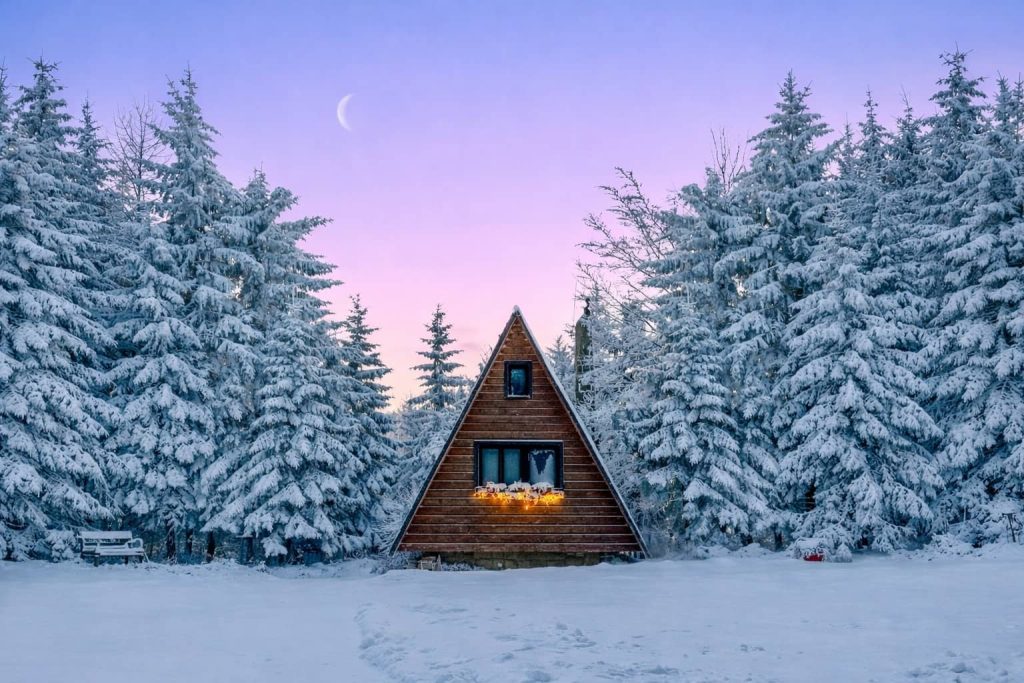
Not all cabins are created equal. On the rugged end, you’ll find tiny backcountry shelters with a woodstove, a bunk, and an outhouse — often a hike or paddle from the nearest road. On the other end, you’ll find Alaska wilderness cabins and lodges with private bathrooms, Wi-Fi, radiant heat, and on-site guides who can take you out on the mountain. In between sits everything else: private A-frames on Airbnb, family-run cabin properties with a few units clustered together, and larger lodges that happen to call their rooms “cabins.” When you’re comparing options, pay close attention to what’s actually included — two listings that both say “cabin” can describe wildly different experiences.
Typical Amenities (and What “Off-Grid” Really Means Here)
Most modern cabin rentals near Anchorage include hot water, a full bathroom, heat, Wi-Fi, and at least a kitchenette. “Off-grid” in this region usually describes the setting — dark skies, no neighbors, no light pollution — rather than a lack of amenities. Plenty of off-grid properties still have strong internet and hot showers; they just aren’t inside city limits. Before you book, always double-check three things: whether there’s a private bathroom, how heat works in winter, and whether the property is drivable year-round (some remote cabins are only accessible in certain seasons).
The Best Areas for Cabin Rentals Near Anchorage, Alaska
Location shapes your trip more than any other single factor. Here are the four most popular zones for cabin stays, each with its own personality.
Girdwood (About 40 Minutes South)
Girdwood sits along the Turnagain Arm south of Anchorage and is best known for the Alyeska ski resort. Cabins here tend to be tucked into forested neighborhoods, so you’re close to world-class skiing in winter and trailheads in summer, though mountain views from the cabin itself are often limited by the trees. A good pick if you want a small-town feel with restaurants nearby.
Eagle River and Chugach State Park (Under an Hour)
Eagle River is the closest “cabin country” to Anchorage — about 25 minutes north. You’re still close to the city but right next to Chugach State Park, which has some of the most accessible alpine hiking in Alaska. Rentals here tend to be private homes or guest cabins rather than dedicated lodges.
Eklutna Lake Area (About an Hour North)
Further up the Glenn Highway, the Eklutna Lake area feels dramatically more remote even though it’s barely outside town. This is classic glacial-lake scenery with paddle-in public use cabins and a handful of private properties — summer kayaking and fall color are the big draws.
Hatcher Pass and the Talkeetna Mountains (About 90 Minutes North)
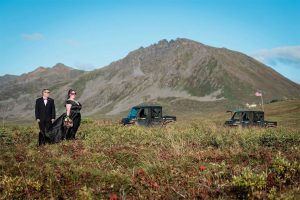
Hatcher Pass sits in the Talkeetna Mountains north of Wasilla and Palmer, and for many travelers it’s the sweet spot — far enough from the city to feel genuinely wild, close enough to reach after a single direct flight. The area is known for big tundra views, historic gold-mining sites, backcountry skiing in winter, berry picking in summer, and some of the darkest skies in south-central Alaska. It’s also become a go-to for couples eloping in Alaska — the roadside overlooks and short ridge hikes deliver a real wilderness ceremony backdrop without a long drive or backcountry trek. If the real draw of your trip is mountains and wilderness rather than city amenities, this is the area to start with.
Public Use Cabins vs. Private Cabin Rentals vs. All-Inclusive Lodges
Most cabin searches turn up three very different types of stays. Knowing which is which saves a lot of confusion.
Public Use Cabins — Cheap, Rugged, and Usually a Hike Away
Alaska State Parks and the U.S. Forest Service run dozens of public use cabins within 90 minutes of Anchorage. They’re inexpensive, beautifully located, and a real Alaskan experience — but bare-bones. Expect a bunk, a woodstove, and an outhouse. You bring everything else: water, food, sleeping bags, toilet paper. Many require a hike, paddle, or snowmachine to reach. Great for experienced outdoor travelers; rarely the right fit for a first Alaska trip.
Private Cabin Rentals — Comfort and Independence
These are the cabins you find on Airbnb, Vrbo, and Booking.com. You get your own space, usually a kitchen, and total control of your schedule. The tradeoff: you’re also responsible for the logistics — groceries, cooking, planning activities, booking tours, and driving yourself everywhere. For visitors who already know Alaska or love trip-planning, this is ideal. For first-timers trying to fit a lot into a short trip, it can get overwhelming.
All-Inclusive Lodges and Unique Stays — Everything Handled for You
A smaller but growing category: properties where your lodging, meals, transportation, and guided excursions are all bundled into one booking. Instead of juggling a rental car, separate tour operators, and restaurant reservations, you show up and let the lodge run the trip. This is the model behind the best Alaska all inclusive vacations — and it’s especially popular with travelers who want to experience Alaska deeply without spending weeks planning. The catch: these stays cost more per night than a bare cabin. What you’re paying for is everything else being handled.
How to Choose the Right Cabin Rental for Your Trip
Once you know the landscape, matching it to your trip gets much easier. A few questions worth asking before you book.
Traveling in Summer vs. Winter
Alaska has two very different cabin seasons. From roughly May through September you get long daylight hours, green mountains, fishing, hiking, glacier access, and wildlife everywhere. From late September through April the landscape changes completely — short days, snow-covered mountains, and the possibility of aurora viewing on clear nights. If the Northern Lights are part of why you’re coming, look specifically for a Northern Lights cabin in Alaska — somewhere with genuinely dark skies, a view of the northern horizon, and ideally staff who can wake you if aurora appears. Sightings are never guaranteed (it’s a natural phenomenon), but the right location dramatically raises your odds.
Couples, Families, and Groups — What Works for Each
For couples, smaller and more intimate usually wins — a stand-alone cabin or a small lodge beats a sprawling resort. Many travelers planning romantic getaways in Anchorage, Alaska gravitate toward places with mountain views, private bathrooms, and just a handful of other guests on the property. Families with kids often prefer a cabin with a full kitchen and separate bedrooms, ideally in an area with easy, shorter hikes. If you’d rather skip the planning entirely, an all-inclusive family trip to Alaska handles meals, transport, and kid-friendly excursions in one booking. Larger groups traveling together (three-plus couples, multi-generational trips) are usually better served by a small lodge or a cluster of neighboring cabins rather than one giant vacation rental — the shared spaces matter.
How Far From Anchorage Is Too Far?
Generally, anything within two hours of Anchorage is reasonable for a multi-day trip. Under 45 minutes is ideal if you’ll be making day trips back into town. Beyond two hours, you’re really choosing a different destination (Talkeetna, Seward, Denali), not an Anchorage-area cabin. The sweet spot for most visitors is the 60-to-90-minute range — far enough to feel remote, close enough that transfers and tours are still easy.
What to Know Before You Book
When to Book (and How Far Out)
Summer (June through August) is peak season and popular cabins fill up three to six months ahead. Aurora season (late August through early April) is increasingly in demand too, especially around equinox peaks and major holidays. Shoulder seasons — May and September — are your best chance to find availability on short notice, and they’re genuinely beautiful times to visit.
What to Pack for a Cabin Stay in Alaska
Layers always. Weather can shift quickly, especially in the mountains. Waterproof boots and a real rain shell matter even in summer. For winter, bring insulated boots, a heavy jacket, gloves, and a warm hat — and check with your host before assuming the cabin has enough blankets; most do, but remote places sometimes don’t. A power bank is smart if you’ll be off-grid for any length of time.
Rental Cars, Driving, and Getting Around
Most Anchorage-area cabins assume you have a rental car. If you don’t want to drive — especially in winter, when icy roads and long dark hours can be stressful for visitors — choose a property that includes transportation from Anchorage. It’s a bigger quality-of-life upgrade than most travelers expect, and it opens the door to enjoying a glass of wine at dinner without the drive back.
A Different Kind of Stay: The Off-Grid Castle in Hatcher Pass
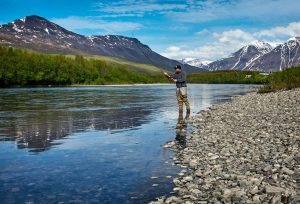
If this guide has you leaning toward the all-inclusive, comfortable, guided end of the spectrum — where you don’t have to plan, cook, or drive — there’s one property near Anchorage worth knowing about. Hatcher Pass Castle is a renovated castle-style lodge tucked into the Talkeetna Mountains, about 90 minutes north of Anchorage. One booking covers lodging in an aurora-facing room, all meals and beverages, transportation to and from Anchorage, and customizable guided excursions — from UTV tours and Matanuska Glacier hikes to Willow Creek fishing and Northern Lights viewing in winter. It’s off-grid in the way that matters (dark skies, quiet, real mountain views), but not in the way you might worry about: private bathrooms, Wi-Fi, radiant heat, and hot water are all standard.
It’s not a cabin in the traditional sense — but for travelers who wanted the cabin feeling without any of the logistics, it’s often the stay people end up preferring once they see what’s included. Worth a look if “everything handled” appeals to you.